Back in September I posted about the National Park Service's proposal as to how it might benefit from bioprospecting in the parks, where private interests explore parks for commercially viable organisms.
Towards the end of the post I wondered aloud whether this prospect might encourage park superintendents, already hard-pressed for operating funds, to "encourage biotech companies to come search their landscapes? Talk about
commercialization of the park system."
Well, there are some folks who share those fears, so much that they've launched a website specifically to fight the Park Service's proposal. At "Parks Not For Sale" you can find more background on commercial bioprospecting, bone-up on the case in Yellowstone back in 1997 that led to this brouhaha, and find a ready-to-go letter of opposition you can fire off to the Park Service asking it to abandon commercial bioprospecting in national parks.
On its face, this seems like a pretty cut-and-dried approach to protecting national parks from commercialization, a fight I believe must be fought. However, does "Alternative C," which opposes bioprospecting in the parks "for any commercially related research purpose," the option endorsed by the "Parks Not For Sale" folks, really accomplish that goal?
If I recall correctly, back in the 1960s Thomas Brock, then a professor at the University of Wisconsin-Madison doing non-profit research in Yellowstone, found a microbe living in a hot springs that he dubbed Thermus aquaticus for its affinity for hot water.
Well, long story short, over the years this microbe generated millions -- if not billions -- of dollars in commercial applications, even though it was a non-profit venture that discovered it. Shouldn't the Park Service, and American taxpayers who fund the agency and pay for the parks, have benefited from that discovery?
My thinking is that none of the alternatives the Park Service currently is offering when it comes to "benefits sharing" is the solution to this issue. After all, what's to prevent a university from bioprospecting in Yellowstone, finding something commercially viable, and then selling it to the highest bidder?
The outcome under that scenario would once again, as was the case with Thermus aquaticus, leave the Park Service on the outside looking in and losing out on any royalties it arguably should be entitled to.
With only two cups of coffee in my system this morning, I don't know what the best solution to this dilemma is, but I don't think it can be found in any of the current three options.
Giving the Parks Over to Bioprospectors

By Kurt Repanshek - November 1st, 2006
Add comment

Support Journalism about National Parks!
National Parks Traveler is a 501(c)(3) nonprofit.
The Essential RVing Guide
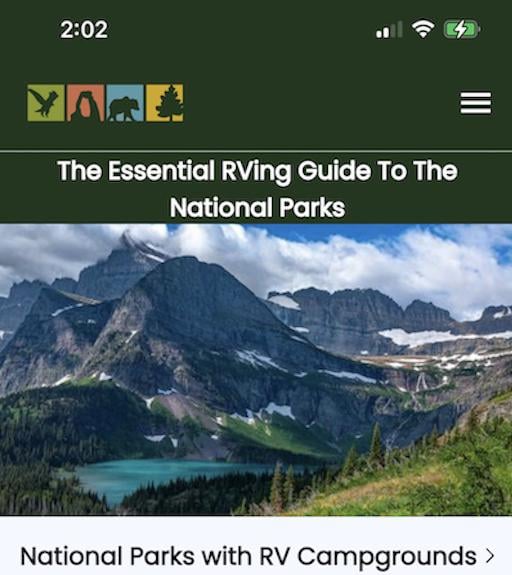
The National Parks RVing Guide, aka the Essential RVing Guide To The National Parks, is the definitive guide for RVers seeking information on campgrounds in the National Park System where they can park their rigs. It's available for free for both iPhones and Android models.
This app is packed with RVing specific details on more than 250 campgrounds in more than 70 parks.
You'll also find stories about RVing in the parks, some tips if you've just recently turned into an RVer, and some planning suggestions. A bonus that wasn't in the previous eBook or PDF versions of this guide are feeds of Traveler content: you'll find our latest stories as well as our most recent podcasts just a click away.
So whether you have an iPhone or an Android, download this app and start exploring the campgrounds in the National Park System where you can park your rig.

Comments