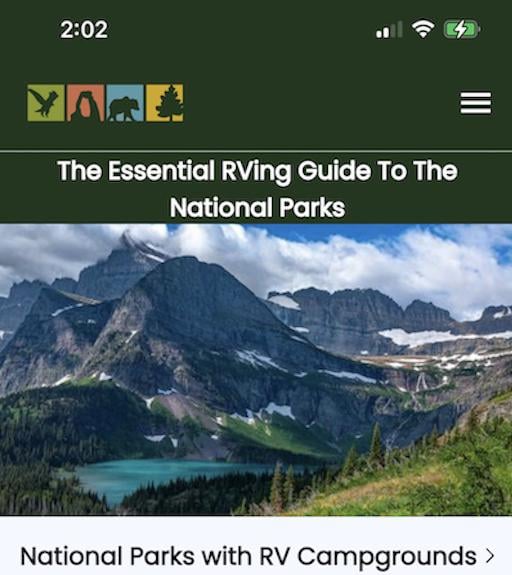
National parks represent a spectacular legacy handed down to today’s generations, but it is one that also carries a hefty responsibility of stewardship. That becomes quickly obvious in Ken Burns’ The National Parks: America’s Best Idea. This notion of responsible stewardship is not new at all. In many ways it’s trite.
NPS sites in Hawaii are preparing for the expected arrival of Tropical Storm Felicia later today. Backcountry trails and campsites and other areas have been closed at two parks, and visitors should check on current conditions before planning a visit.
It’s July, so heat is as good a theme as any for this week’s quiz. Answers are at the end. If we catch you peeking, we’ll make you devise 101 simple experiments illustrating that heat is an unavoidable byproduct of work.
An impressive noctural light display at Hawaii Volcanoes National Park, may be responsible for a recent small but noticeable uptick in travel to the Big Island and the park this month. With Hawaii’s national park visitation way down, even a minor boost in visitation is very welcome.
With fuel prices up, airfares up, and incomes stagnant if not down, is it any surprise that visitation to national parks on the Hawaiian Islands is down quite a bit this year?
If you subconsciously want to become a search-and-rescue statistic in the National Park System, your best chance would be in either Grand Canyon National Park, Gateway National Recreation Area, or Yosemite National Park.
The five U.S. Geological Survey Volcano Observatories are receiving $15.2 million to help upgrade their monitoring of volcanics across the West, in Alaska, and in Hawaii, including within Yellowstone, Mount Rainier, Hawaii Volcanoes, and Lake Clark national parks.
Yellowstone National Park entered the new year shaking and rattling. Fortunately, there hasn’t been any real rolling just yet. But over at Lake Clark National Park and Preserve, Redoubt Volcano has been going through its own gyrations, and volcanologists suspect it just might erupt any time now. Against that backdrop, if you want to see volcanics in action, or signs thereof, the National Park System has many opportunities for you.
Would you like an up close and personal view of the big lava flow that’s making its way into Hawaii Volcanoes National Park? You’ll need to make a long trek over dangerous, unmarked terrain. Check with park officials first.
Hawaii Volcanoes National Park came into being as a component of Hawaii National Park in 1916, but it it wasn't until September 22, 1961, that it became a stand-alone unit. The fireworks for its 47th "stand-alone birthday" are being provided by Kilauea, one of the world’s most active volcanoes. An eruption that began March 19 has yielded half a dozen explosive eruptions, a roiling lake of lava, and a mile-high ash plume.
Hawaii’s national parks are attracting fewer visitors than last year. As of July, attendance tallies were down nearly 10% for the year and showing signs of getting worse, especially at the parks located furthest from the main tourism/convention hub at Honolulu.
You'll be hard-pressed to find a more dynamic setting than at ocean's edge at Hawaii Volcanoes National Park when a river of molten lava is pouring into the Pacific Ocean.
Hawaii Volcanoes National Park protects and showcases a spectacular volcanic resource. Visit the park and you're able to see lava flows, steam vents, and possibly minor eruptions.
Many nonnative plant and animal species that have invaded our national parks pose a danger to the native species. On Hawaii’s Big Island, invasive plants are threatening to wreak ecosystem havoc in Hawaii Volcanoes National Park. To combat this onslaught, the Park Service uses manual and mechanical removal, herbicide spraying, and biological controls.
A substantial surge in sulfur dioxide gases being vented in the Halema'uma'u Crater at Hawaii Volcanoes National Park has prompted park officials to prepare an evacuation plan. For now, though, trade winds and rain seem to be safely dispersing the gases.
One of the most intriguing interpretive tours I’ve joined across the national park system was the “wild cave tour” offered at Mammoth Cave National Park. For six or more hours in sections of the cave off-limits to the more traditional tours we scooted through tight places on our bellies when not able to get by on hands and knees.
Talk volcanoes and national parks and folks usually think of Hawaii Volcanoes National Park, and perhaps Lassen Volcanic National Park. In truth, though, there are at least 13 units of the national park system that have a volcanic past in some form or fashion.
Recent comments
41 min 57 sec ago
2 hours 6 min ago
5 hours 37 min ago
6 hours 21 min ago
6 hours 31 min ago
6 hours 37 min ago
7 hours 49 min ago
8 hours 8 min ago
8 hours 34 min ago
10 hours 4 min ago