A case stretching from the dusty high desert of Arizona all the way to Washington, D.C., has many of the markings of a Tony Hillerman novel -- conspiracy, intrigue, and wrongdoing in Indian country. It also has spurred a lawsuit accusing a number of National Park Service officials with misconduct and wrongful seizure of property belonging to a man described as one of the "last authentic Indian traders."
A lengthy investigation into allegations that Gettsysburg National Military Park Superintendent John Latschar acted unethically in running the park found no wrongdoing, but it reportedly turned up thousands of instances in which the superintendent's computer was used to access pornographic images.
Yellowstone. Canyonlands. Voyageurs. Grand Canyon. Great Smoky Mountains. Glacier. Surprising as it is, none of those parks has so much as a single acre of officially designated wilderness.
For the past four years, since Last Child in the Woods hit bookstores, there has been a greatly heightened concern over how society connects with nature. Across the United States there has been hew and cry from many corners that society is losing not just its comfort in the outdoors, but also its concern for it. A new study indicates that while there should be reason for concern, perhaps the solution is as simple as a walk in the woods.
Fuel economy, it seems, is just as important to black bears in Yosemite National Park as it is with many visitors. And so when the bruins shop for fuel, more and more they tend to find themselves munching out in minivans, according to a study published in the Journal of Mammalogy.
How do you manage a 3,000-mile-long historic trail that is largely water-based and touches three states? The folks running the Captain John Smith National Historic Trail are open to your suggestions.
If you look at a map of the National Park System, you'll find a glaring omission in the northeastern United States. There is no large expanse of wilderness protected by a national park. Proponents of a "Maine North Woods National Park and Preserve" want to change that.
Greenpeace activists were able to scale to the top of the iconic Mount Rushmore in July and unfurl a banner of protest over the U.S. approach to global warming because of a number of glaring security lapses, breakdowns and shortcomings at Mount Rushmore National Memorial, according to a National Park Service investigation.
A review of how the U.S. Bureau of Land Management handled energy leases near national parks in Utah shows some areas where the system broke down and carries recommendations for, at a minimum, review of previous leasing decisions. Some tracts, the report said, should be removed from leasing.
Despite years' old concerns that terrorists might strike at iconic units of the National Park System, the National Park Service's approach to security is haphazard, inefficient, and ineffective, according to a Government Accountablity Office report.
After years of at-times acrimonious ligation, a settlement was announced Wednesday between the National Park Service and advocacy groups over development in the Yosemite Valley and how it might impact the Merced River, a wild and scenic stream. It's an agreement that could substantially redefine the human impact on one of the most scenic valleys in the world.
Some push-back has surfaced against U.S. Senator Diane Feinstein's efforts to see oyster farming continue in an area of Point Reyes National Seashore that has been destined for official wilderness designation.
A federal judge in Wyoming who in the past has supported higher numbers of snowmobiles in Yellowstone National Park ruled Thursday that he could not overturn the National Park Service's decision to cap daily snowmobile numbers at 318 this coming winter.
Groups as diverse as the Great Old Broads for Wilderness and the Quiet Use Coalition urged the U.S. Senate on Tuesday to pass climate change legislation and a national energy policy that would slow greenhouse warming of the Earth, and called for millions of dollars to be invested in helping wildlife and natural resources cope with climate-change impacts. In all, more than 600 groups signed off on the letter.
There long have been pockets of disgust over federal land ownership in the West, and perhaps nowhere are those sentiments stronger than in Utah, where roughly two-thirds of the landscape is federally managed. While the "Sagebrush Rebellion" mightily reared its head some three decades ago, its waning vestiges are on trial this week over whether a creek bed constitutes a road in Canyonlands National Park.
Fall is one of the most gorgeous seasons in the National Park System. Trees are changing colors, the air is cooler and carrying scents of autumn, animals are on the move, and if you visit Capitol Reef National Park you'll find the peaches and apples are ripe for harvest!
While the National Park System protects wide swathes of officially designated wilderness, there are many, many wilderness-quality acres in the parks that are not so designated, though they are managed as de facto wilderness. President Obama, with hopes Americans would become more familiar with wilderness, has designated September as National Wilderness Month.
A split ruling this week by the 10th U.S. Circuit Court of Appeals concerning off-road vehicle access to the Grand Staircase-Escalante National Monument, the Glen Canyon National Recreation Area, and other public lands in southern Utah could also affect ORV issues on national park lands throughout the region.
What do you expect from the National Park System? How would you like to see the National Park Service manage the 391 parks? Those are at the same time simple and complex questions. Perhaps the obvious answer is that we want parks managed for people to enjoy. But from there the obvious quickly fades away. Do we want them managed for preservation, for the betterment of species that inhabit the parks, for their landscapes to persist immemorially?
Climate change with its warmer and drier seasons appears to be responsible for a decline in large-diameter trees across much of Yosemite National Park, according to a recently released study.
The longstanding relations between the United States and Canada are being strained a bit by a proposal to mine for coal in a biologically diverse region of British Columbia that just happens to be upstream of Glacier National Park.
National Park Service reports on the impacts of commercial oyster farming at Point Reyes National Seashore were skewed, "selectively" manipulated in several areas, and inconclusive overall, according to a National Research Council review.
Should search-and-rescue subjects be billed for the cost of their rescue? It's long been a thorny issue, one that organizations that respond to SARs long have opposed.
Somewhat small in stature at just about 250 miles in length, the Yampa River that flows through Dinosaur National Monument is significant not just for its white-water rapids but for its unbridled flows. Not a single dam stands in the way of this river famous with rafters and the lifeblood for four species of endangered fish.
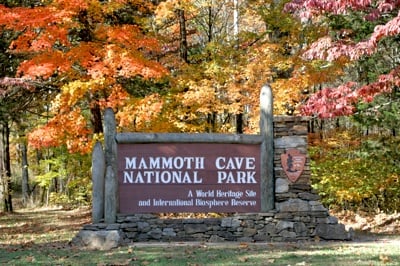
There are some underground trails in Mammoth Cave National Park that are supposed to be rough and rugged. The routes followed for the popular "wild cave" tours, for instance. But most of the other trails should be relatively easy on visitors, and park officials say it's time to do some rehab work.
The National Park Service has been trying to raise its "climate friendly" image in recent months, but it's concerned about the potential impact huge solar power arrays on Western lands could have on national parks.
Different administrations in Washington have different sets of priorities. While the Bush administration talked about helping restore the massive Everglades ecosystem, the Obama administration is sending signals it will work harder to push the project forward.
Piping plovers and sea turtles have halted traffic at Cape Hatteras National Seashore, lava flows and their gases have done the same at Hawaii Volcanoes National Park, and floods have shut down traffic at Olympic National Park and Mount Rainier National Park. At Cape Cod National Seashore, a tiny toad has the power to divert traffic.
One of the more enduring stories about America's national park movement is that it was spawned in the early fall of 1870 during talk around a campfire deep in the heart of today's Yellowstone National Park. But did it?
Though it's been a mostly quiet winter on the coast of North Carolina, things might get a bit testy in the coming weeks as Cape Hatteras National Seashore releases its pre-nesting closure plans to protect piping plovers, a threatened species.
Syndicate content