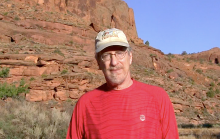
Kurt Repanshek
About
Though my career has introduced me to Bill Clinton, taken me down into the command capsule of an MX missile silo, and landed me in an editorial role with the Salt Lake Organizing Committee for the 2002 Winter Games, exploring and writing about the national parks has proven the most enjoyable to date.
I've stood on the top of the Grand Teton, cross-country skied to the North Rim of the Grand Canyon, paddled the backcountry of Yellowstone National Park, and enjoyed many other fascinating adventures in the park system.
But just as valuable as those experiences have been, so, too, is exploring the management side of the National Park System: the workings of the National Park Service, congressional action, or inaction, affecting the parks, and on-the-ground decisions pertaining to natural, cultural, and historic resources, as well as public access and enjoyment.
Before launching National Parks Traveler in August 2005, I spent 14 years with The Associated Press in positions ranging from a general assignment reporter to correspondent-in-charge for the state of Wyoming. Since embarking on a freelance career in the fall of 1993, my articles have appeared in Smithsonian, National Geographic Traveler, Audubon, National Wildlife, Hemispheres, Wilderness, and other publications.
My other other credits include an article on national parks of the world for Microsoft’s Encarta CD, as well as three guidebooks to the national parks. As a contributor to the Travel Arts Syndicate, my stories have appeared in the Miami Herald, Atlanta Journal-Constitution, Pittsburgh Post-Gazette, Denver Post, and other newspapers.
While the Traveler started out only as a means to promote my public lands, environmental, and outdoors writing, it has evolved into a vehicle for both promoting the national parks and nurturing advocates for them. Add your voice to the dialogue through commenting on our stories.
Picture

Support Journalism about National Parks!
National Parks Traveler is a 501(c)(3) nonprofit.
The Essential RVing Guide
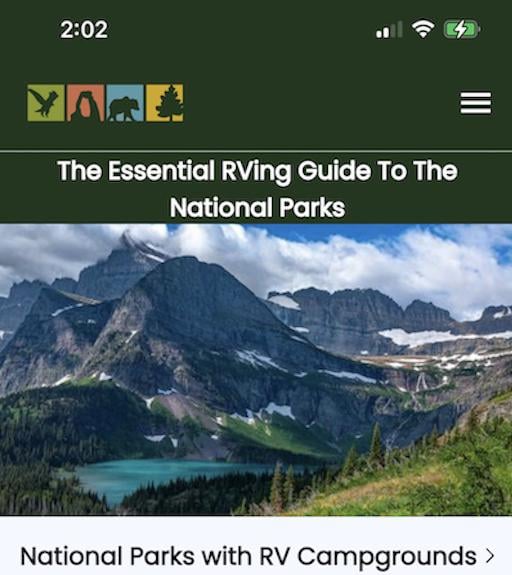
The National Parks RVing Guide, aka the Essential RVing Guide To The National Parks, is the definitive guide for RVers seeking information on campgrounds in the National Park System where they can park their rigs. It's available for free for both iPhones and Android models.
This app is packed with RVing specific details on more than 250 campgrounds in more than 70 parks.
You'll also find stories about RVing in the parks, some tips if you've just recently turned into an RVer, and some planning suggestions. A bonus that wasn't in the previous eBook or PDF versions of this guide are feeds of Traveler content: you'll find our latest stories as well as our most recent podcasts just a click away.
So whether you have an iPhone or an Android, download this app and start exploring the campgrounds in the National Park System where you can park your rig.
