Tunnel View aspect of the Yosemite Valley, copyright Ian Shive, www.waterandsky.com
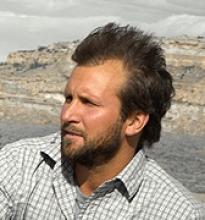
Featured Photographer
Ian Shive is an award-winning conservation photographer, author and multimedia producer whose goal is to captivate audiences through new trends in story telling using imagery as the primary tool. Ian is the recent recipient of the Gold Medal, 2010 Nautilus Book Award, in the Great Peacekeepers category in recognition of his top-selling book The National Parks: Our American Landscape, released in August 2009 on Earth Aware Editions, for promoting “spiritual growth, conscious living and positive social change…and offering the reader "new possibilities" for a better life and world, joining previous Nautilus Award winners including Deepak Chopra, M.D., Eckhart Tolle, and His Holiness the Dalai Lama, among others.
Referred to as the leading chronicler of America’s National Parks today and a self-labeled “wilderness diplomat,” Ian and his book The National Parks: Our American Landscape were the focus of a presentation on the challenges facing America’s most beloved landscapes in Washington, D.C. in November 2009, hosted by Senators Sheldon Whitehouse and Max Baucus.
View more of Ian's work at www.waterandsky.com
As awe-inspiring as the Yosemite Valley is, it is not the length and breadth of Yosemite National Park, but rather only one measure of this High Sierra beaut. Sadly, a surprising number of people never venture out of the valley with its towering granite walls and, in season, wispy waterfalls, to explore the other wonders of the park.
And that's their loss.
John Muir discovered that in 1869 when he spent his first summer in the Sierra, venturing beyond the Yosemite Valley and high into the upper reaches of today's national park. It was there, among the mountains, the granite domes, the meadows, streams and forests that he found the deeper beauty of Yosemite, a beauty that can't easily be seen from the valley floor. The following passages come from his book, My First Summer in the Sierra:
Probably more free sunshine falls on this majestic range than on any other in the world I'd ever seen or heard of. It has the brightest weather, brightest glacier-polished rocks, the greatest abundance of irised spray from its glorious waterfalls, the brightest forests of silver firs and silver pines, more star-shine, moonshine, and perhaps more crystal-shine than any other mountain chain, and its countless mirror lakes, having more light poured into them, glow and spangle most.
And how glorious the shining after the short summer showers and after frosty nights when the morning sunbeams are pouring through the crystals on the grass and pine needles, and how ineffably spiritually fine is the morning-glow on the mountain-tops and the alpenglow of evening. Well may the Sierra be named, not the Snowy Range, but the Range of Light.
Climb up into this high country along the meandering Tioga Road and you're quickly surrounded by granite domes perfect for scrambling, lakes, and paths that lead hikers and pack trains deeper, and higher, into the park's core.
And while the light seems to shine best in the high country, down in the Yosemite Valley the magic can be seen at certain times of year, such as when Horsetail Fall catches and shimmers with the sun's rays, and throughout the spring and early summer when the high country's snowmelt plunges into the valley, casting off its feathery, diamond-beaded spray.
This valley does lure with its falls of water and towering walls of granite. And it should be on any first-timer's list of stops. But as impressive and captivating as Yosemite's acclaimed valley is, any trek to the national park that begins there should lead one further up into the highlands that so enchanted Muir, for they are just as beautiful and entrancing today as they were in the 1869 when he first ascended up into them.
Park History: Yosemite National Park
Older than Yellowstone National Park in terms of being set aside for the public's enjoyment, Yosemite could fairly be called the elder statesman of the National Park System. And, no doubt, there are those who would say Yosemite's scenery is second to none in the system.
Lodging in Yosemite
Yosemite offers an incredible diversity of lodging possibilities, from the palatial Ahwahnee Hotel to the barebones "Housekeeping Camp." Where you wind up depends as much on your budget as on your timing.
Camping in Yosemite
Camping in the High Sierra can be sublime, and in Yosemite you have more than a few campgrounds to choose from to set up your tent in.
Hiking in Yosemite
Although the lure of the Yosemite Valley with its waterfalls and granite walls is foremost in many park visitors' minds, the national park is a Mecca for hiking, with plentiful choices for day hikers as well as long-distance warriors.
Summering in Yosemite: The Logistics
Yosemite is one of the most iconic of the national parks, and rightfully so. The seven-mile-long valley that draws visitors from throughout the world has been described by some as the most beautiful place on Earth, and it’s easy to understand the inspiration behind that sentiment.
Traveler's Checklist: Yosemite
Stick your head into Yosemite Valley in Yosemite and you'll quickly come to appreciate why they say that 95 percent of the park's visitors can be found in the spectacularly scenic valley. And while it's good they've come to explore the valley, they'll head home greatly shortchanged if they don't explore the rest of the park.
Yosemite Valley Rockfalls
By some measures, the Yosemite Valley is in a constant state of collapse. Back in 2009 alone there were 52 recorded rockfalls in the valley. They are, as park geologists will tell you, a part of life in Yosemite.
Yosemite Nature Notes: Rockfalls
Despite the towering walls of granite that rim the Yosemite Valley, the place is decidedly not static. Rather, it's a constantly evolving geologic entity that is both deadly and mesmerizing. In this production of Yosemite Nature Notes, videographer Steven M. Bumgardner explains how, since the disappearance of glaciers about 15,000 years ago, rock falls have become the greatest erosional factor in the continued sculpting of Yosemite Valley.
Yosemite Nature Notes: Night Skies
Most visitors to Yosemite National Park come to enjoy the waterfalls and the walls of granite, but there's another dimension that deserves your attention: the dazzling night skies overhead. Videographer Steven M. Bumgardner took his cameras out after dark to capture some of those skies. Turning his lenses on vantage points such as Yosemite Fall and Half Dome set against pinpoints of light, and the occasional shooting star and passing satellite, Mr. Bumgardner has put together a steller video of the park's night skies.
Yosemite Nature Notes: Horsetail Fall in Full Technicolor
When the afternoon sun illuminates Horsetail Fall in Yosemite, it can be difficult to believe it's only the sun igniting the waterfall. In the following episode of Yosemite Nature Notes, videographer Steven Bumgardner explains some of the natural history behind this phenomenon and offers some tips on how to capture a photograph of it yourself
Yosemite Nature Notes: Moonbows
Those nights that coincide with the full moon over Yosemite National Park bring out an unusual park visitor, one who goes in search of "moonbows" that rise above the park's waterfalls. Park videographer Steven Bumgardner, who has compiled an amazing library of videos examining everything from Yosemite's glaciers to frazil ice, now focuses on these colorful ribbons that appear under the full moons of spring and early summer.
Yosemite Nature Notes: Glaciers
In this edition of Yosemite Nature Notes, Steven Bumgardner and his crew head into the high country of the park to learn about glaciers, such as the Lyell Glacier.
Yosemite Nature Notes: Winter
What does winter typically look like in Yosemite National Park? Yosemite videographer Steven Bumgardner pulled together wintry scenes for the following video.
Yosemite Nature Notes: Sky Islands
Most visitors to Yosemite National Park tour the Yosemite Valley and head out of the park. A small percentage of others take to the Tioga Road and destinations off of it. One area that the vast majority of visitors misses is along the roof of the park, where you'll find "sky islands." Fortunately, you can gain insights to these landscapes -- "high, flat plateaus ... found at elevations around 12,000 and 13,000 thousand feet" -- thanks to videographer Steven Bumgardner and his team at Yosemite.
Yosemite Nature Notes: Water
Yosemite National Park is a landscape of big cliffs, outcrops, and granite domes. But it also is where towering waterfalls, shimmering lakes, and meandering streams mesmerize visitors. In this edition of Yosemite Nature Notes, videographer Steven Bumgardner looks at water in Yosemite.
Yosemite Nature Notes: Big Trees
Yosemite National Park harbors more than just towering walls of rock and wispy waterfalls. There also are big, big trees -- giant sequoias -- that you can find in the Mariposa Grove, or the Tuolumne Grove, or Merced Grove. Yosemite videographer Steven Bumgardner shows off those trees in the following episode of Yosemite Nature Notes.
Yosemite Nature Notes: Frazil Ice
Frazil ice. What the heck is that? If you've been to Yosemite in spring, you might know. If not, check out this episode of Yosemite Nature Notes by Steven Bumgardner.
Yosemite Nature Notes: Black Oaks
Many of us associate trees with our national park visits. Aspens and lodgepoles in Rocky Mountain, Grand Teton, and Yellowstone national parks, for instance, hemlocks in Great Smoky Mountains National Park, or cypress in Everglades National Park. In Yosemite National Park, the black oak is one of the iconic trees, one that strikes Steven Baumgardner, the park's videographer, in particular.
Yosemite Nature Notes: Maps
What can you glean from glancing at a map? If it's a road map, folks will look for routes to their destinations, interesting sidetrips, population centers. Topographical maps can provide rich details of landscapes and help us navigate through them. In this episode fromYosemite Nature Notes, Producer Steven M. Bumgardner, aka Yosemite Steve, introduces us to the map wonders of Yosemite National Park. There's even a cameo appearance by Ken Burns!
Yosemite Nature Notes: The Tuolumne River
The name can be a mouthful, turning your tongue in knots as you try to pronounce "Two-ahl'-oh-me." Native American in origin, some believe Tuolumne means "Many Stone Houses" or "Straight Up Steep," which, if you've ever traveled the Tioga Road through Yosemite certainly seems appropriate. In this episode of Yosemite Nature Notes the constantly filming and editing Steven Bumgardner takes a look at this river from "its glacial headwaters at 13,000 feet down through Tuolumne Meadows and into the Grand Canyon of the Tuolumne"
Some Worthy Side Trips to Consider
If you're flexible with your travel to Yosemite, there are some side trips in the vicinity that'd be worth considering.
Yosemite National Park News
Yosemite National Park Images
Visitor Center
Copyright 2005-2013
National Park Advocates LLC
Follow the Traveler
Recent comments
-
Sara
on
Fire Island National Seashore...
5 hours 53 min ago
-
justinh
on
Fire Island National Seashore...
6 hours 30 min ago
-
ecbuck
on
Fire Island National Seashore...
7 hours 10 min ago
-
SmokiesBackpacker
on
Fire Island National Seashore...
7 hours 38 min ago
-
ecbuck
on
Fire Island National Seashore...
8 hours 7 min ago
-
Kurt Repanshek
on
Fire Island National Seashore...
8 hours 15 min ago
-
ecbuck
on
Organizations Want Veto Power Over...
8 hours 20 min ago
-
ecbuck
on
Fire Island National Seashore...
8 hours 36 min ago
-
Lee Dalton
on
Fire Island National Seashore...
12 hours 32 min ago
-
Sara
on
Fire Island National Seashore...
13 hours 51 min ago